Monday, July 19, 2010

Early Rooftop Eggplant and Tomatoes


Black Cherry are the first tomatoes to ripen on my roof.


Tomatillos will be ready soon.


I've also had a handful of eggplant ripen. Not having a camera handy, I cut and pasted these pics from google images.


and Diamond.

Learning to cook what you grow is part of gardening. It's not that hard; like anything, it's practice, practice, practice. When I want to do more than simply sauté (blah!) eggplant, I usually reach for one of my Indian cookbooks. Though in this case, it's an Americanized version of an Indian recipe.

Hot, Sweet, and Sour Chickpeas with Eggplant

(Slightly adapted from Mark Bittman’s How to Cook Everything Vegetarian.)

Serves 4. Cooking time 45 min.
Ingredients:

  • 1 or 2 medium eggplant, peeled and then shredded on box grater (This is key: the small pieces of eggplant melt into the liquid, forming a delicious, almost unidentifiable, sauce.)
  • 1 or more cups of water
  • 1 tablespoon peeled & grated ginger (or 1 tsp dried ginger)
  • 1 or 2 hot fresh chilies, seeded and minced (or substitute red pepper flakes)
  • 1 sprig fresh curry leaves, or a few dried (optional)
  • 3 cups cooked chickpeas, with about 2 cups of cooking liquid (Or if you're desperate, two cans of chickpeas + 2 cups water).
  • 1 tablespoon Sambar Powder (2 tsp ground coriander, 1/2 tsp ground fenugreek, 1/2 tsp mustard seeds) or curry powder
  • 1 teaspoon ground turmeric
  • Pinch of asafetida (optional)
  • 2 tablespoons brown sugar
  • 1 tablespoon tamarind paste or freshly squeezed lime juice to taste
  • 8 oz. frozen peas (optional)
  • salt and pepper to taste
  • Chopped cilantro (for garnish)
  • Chopped roasted peanuts (for garnish)
  1. Put eggplant, ginger, curry leaves (if using) and 1 cup of water in 4 quart saucepot and cook/simmer for 20-30 minutes, until eggplant is almost tender.
  2. Add the chickpeas with liquid, Samba/curry powder, turmeric, brown sugar, asafetia if you’re using, and lime juice/tamarind. Add enough water to make it slightly "soupy". Sprinkle with salt & pepper.
  3. Bring to a boil, and then reduce heat and simmer for about 15 minutes until thickened. Add peas, stir, cook for 4 min more. Taste and adjust seasoning/liquid.
  4. Garnish with cilantro and peanuts.
I served it over short grain brown rice.
::::::

It wasn't pretty, but Spain won the World Cup. Nicely done!

Behind the flag, and looking down from my roof, is a tiny triangular piece of land owned by the city that's has been turned into a community garden; a process that I've been working on for the past 3 years. We just started planting 2 months ago, and now there are 13 individual plots as well as a common herb area, picnic table, and (future) compost bin.


[Click on image to enlarge.]


More on the community garden in another post.

Sunday, July 18, 2010

You Say Tomato, I Say Mutato

It's too hot in Chicago to do much more than drink cold sun tea. If you're similarly indoors and looking for some real amusement on the internet, keep reading after the photo.

First, a couple of early birds from the roof garden. At left, the Anna Russian heirloom, possibly the lowest acid I've ever tasted. At right, Amish paste.


Uli Westphal is an artist whose work includes stunning photographs of wonderfully weirdo fruits and vegetables (we're hoping for a few oddballs ourselves this year).

Click here for his Mutato Archive and enjoy the diversity.
The Mutato-Archive is a collection of non-standard fruits, roots and vegetables, displaying a dazzling variety of forms, colours and textures, that only reveal themselves when lawfully enforced standards cease to exist. The complete absence of botanical anomalies in our supermarkets has caused us to regard the consistency of produce presented there as natural. Produce has become a highly designed, monotonous product. We have forgotten, and in many cases never experienced, the way fruits, roots, and vegetables can actually look (and taste). The Mutato-Project serves to document, preserve and promote these last remainders of agricultural diversity.

Thursday, July 15, 2010

The Watermelon Report

Not so long ago my watermelon was the size of a penny.


Now it's 3 inches!


It has been so hot out these past couple of weeks that my SIP ran out of water and the vines on my watermelons wilted... but they still continued to grow. I can't wait to eat them!

The little watermelon said, "You're amazing big melon!"
The big melon said "I know you are, but what am I?"
The little melon said "I will follow in your root steps if you root for me in my SIP!"

Kara

Thursday, July 8, 2010

First Fruit: Tomato, Eggplant, Peppers from the Roof + Vertical Views

Plucking the first fruit off the vine is an experience like no other. What started as a minuscule seed in February-March (thanks Bruce!) has matured under the warmth of indoor light and brought--blinking, I always imagine--out into the sun to harden off before being planted in the incredibly supportive SIP environment.

When you see the first summer harvest on your cutting board, you know another season of good eating is underway.

Eggplant pingtung long + udumalapet (at left)
and tomato Black Sea Man
The heirloom Black Sea Man start came from a local nursery in the wake of our early tomato troubles.

These eggplant taste like cream to me and cook in moments. I halve them lengthwise and lay face-down in a hot cast-iron skillet with a little hot peanut oil over medium-high heat. Let them sear a few minutes and then flip and briefly cover and cook until soft. The pingtung long don't even need a cover.

A drizzle of olive oil, S&P, and there you have it: lunch. I also sliced and fried a couple of the peppers just below. They're hotter this year at this early stage than they were last year.

Santa Fe grande peppers
and summer greens

(I moved the cool-weather greens to a shady part of the roof to extend their production.)

I do love those Santa fe grande peppers--sturdy growth and endless fruits, pretty colors (yellow to flaming red) and variable Scoville heat.

Money shot of the Sea Man:
grey winter dreams come true

You don't need a roof full of soil to do this or a fancy vertical garden system. And you don't need to spend a lot of money either. I stand with our pals at Homegrown Evolution on this (and not just because they linked to us, but hey thanks!): vertical farming is alluring in all sorts of ways...but impractical for many and currently not the most economical way to grow.

As Erik at Homegrown says:
A SIP is as close to "plant and forget about it" as you can get with vegetables. In short, perfect for schools where maintenance is always an issue.
Thanks in part to Bob Hyland's Center for Urban Greenscaping (CuGreen) students in Brooklyn took home their school SIPs for summer vacation.
The SIP home base is the PS 102 garden but due to limited access over the summer recess, it is not the best place to be. That is why the SIPs are growing fresh vegetables at the homes of parents and teachers over the summer.
Here's the truth: you can grow all kinds of food without any trellising at all: bush beans, determinate tomatoes, eggplants, and most peppers. Still, I find trellis vegetables some of the most beautiful because of their twining habit and the way they hang off a vertical plane. So maybe that's part of the allure.

Art made this vertical extension on our cool-weather greens run (which I promised him would never be used for climbing things and therefore wouldn't require a climbing frame...thanks, love). He re-used some wood, bought a couple of 2X3s, and found the small grids at Salvation Army. They appear to be from the endless stream of Ikea junk that ends up on the sidewalk, in the garbage, or at resale shops.

No problemo, we take what we can find. The green grids are from an auction years ago. You could also used old refrigerator shelving as climbing structure. Soon the thin-skinned and deliciously cooling Armenian cukes will be scrambling upward.

Regardless of whether your vegetables are climbing or just squatting in their SIPs, early summer delivers magic.

Almost any garden,
if you see it at just the right moment,
can be confused with paradise.
--Henry Mitchell

Top 10 seeds to sow now through August

Via the Hudson Valley Seed Library, this morning I spotted a nice list that felt synchronous with my post from yesterday--Successful Succession Sowing Summer Seed Sale, including Doug’s Top 10 seeds to sow now through August.

It's a useful list to scan and includes the same baby bok choy we harvested and replanted in a single stroke this week. We got that seed from the Hudson Valley Seed Library and it was strong and true.

Going to seed,
starting from seed


At the same link, you'll note they have their Garden Packs and Library Packs on sale (and by clicking the link in this sentence you also get to meet owners Ken and Doug, of today's list).

Salut to summer sowing! Bruce, do we have any dino kale seeds left?


Tuesday, July 6, 2010

Saving Seeds, Replanting SIPs, World Made By Hand

Yesterday in the blast furnace that is Chicago this week I got myself up to the roof early. I wanted to do two things (three including watering) before 10:
  • Pull plants that had gone to seed and harvest the seed
  • Replant those now-empty SIPs
Here's a bad photo of the baby bok choy we planted on St Patrick's Day (3.17).

We enjoyed a lot of green from this one.

Once I'd pulled the plant, clipped the stem, and stuffed its top into a paper bag, I culled the crusty old fertilizer from around the SIP edges and tossed it into my bucket that comes downstairs to go into the composter.

The nice thing about mid-season SIP replanting is that you needn't dump out all the growing medium. Just re-dress the top for a new planting.

I topped up the potting mix
and added two cups of fresh fertilizer.


Then I flipped over the plastic shower cap
and retied it.


In this SIP, I planted all-season Romaine lettuce mix that Debbie (Kara's mom) gave me.

We'll see if it's truly all-season...

I also sprinkled on some of the bok choy seeds I'd just harvested.

See them here,
in their pods?

(click to big it up)

Finally, before heatstroke set in, I bagged up the IDed seed heads for the bok choy and cress. They need to dry out a bit more before the seeds are separated from the chaff. Two done. But it felt like something.

I just finished the James Howard Kunstler post-oil collapse novel World Made By Hand and there's little chance I'll ever again toss away perfectly good seed. I was struck, honestly, by how much we re-use, re-tool, and re-claim in our own day-to-day life. Without having to.

Here's a quick vid to set the scene for the book, an easy summer read that illuminates the very meaning of "local." Can any author truly imagine the fractures of a post-oil world? Unlikely, but Kunstler's fable was compelling enough to trigger changes in my own thinking after I put down the book.

From Orion Magazine...
Farmers have begun growing poppies, not for the drug trade, but to keep the local doctors stocked with powerful painkillers. The local dentist stays in business using a salvaged pulley drill, and patients bring in their old gold jewelry to use as cavity fillers in place of the high-tech composites used by dentists in ol’ 2007. The electricity doesn’t work anymore, but people in town still get water thanks to the gravity-fed reservoir ...

... the soft underbelly of Kunstler’s rage against what he perceives as America’s obliviousness is that he’s actually a true believer in humanity.

Monday, June 28, 2010

Every Little Thing Gonna Be All Right: Early July Roof Garden

Happens every year. I find myself up on the roof, looking around and singing Bob Marley, in a kind of daze at the magic of it all.

Peas flourishing

Seed pods forming on the baby bok choy


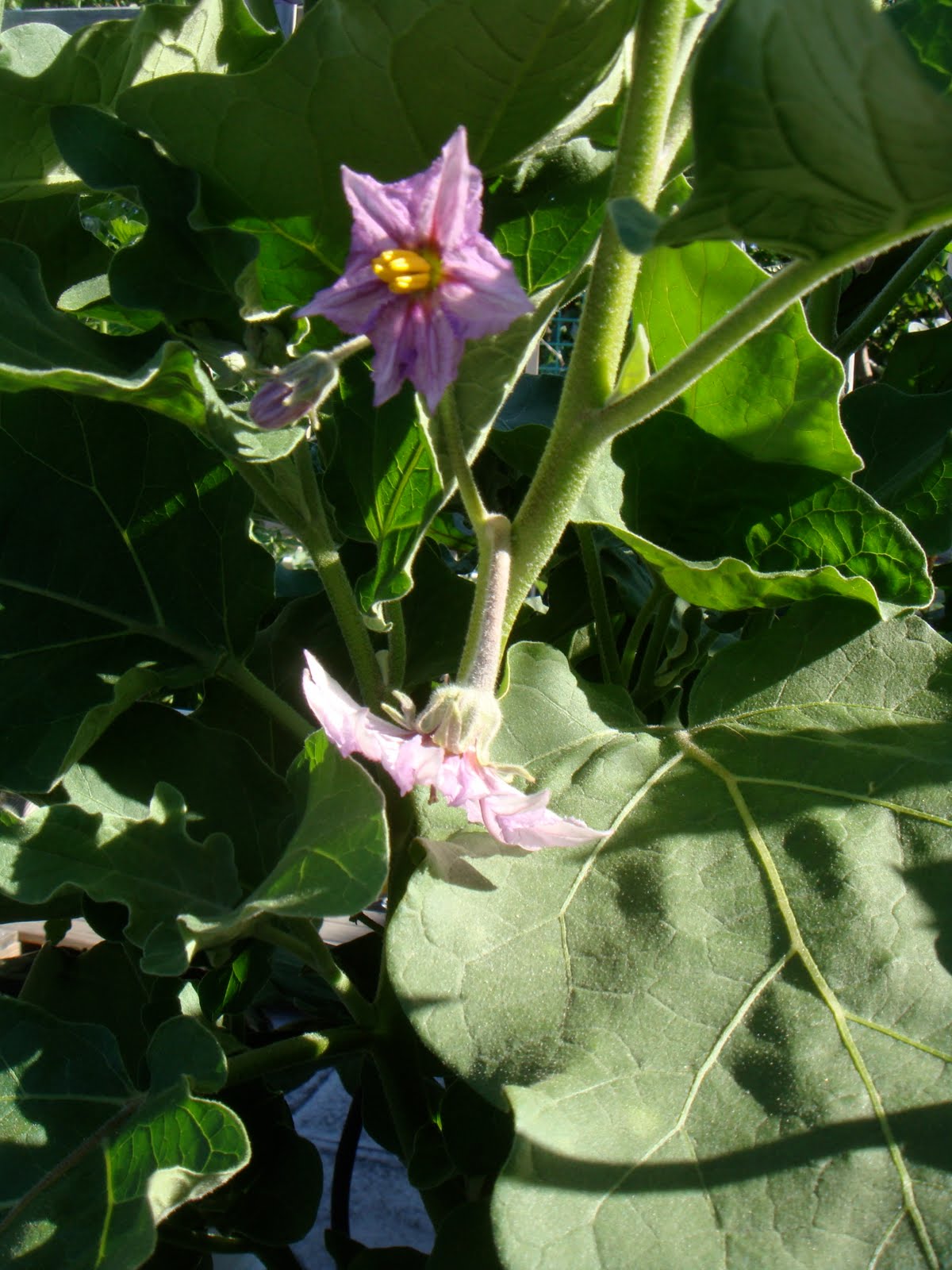
The exquisite beauty of an eggplant fleur


Melons putting out tendrils


Strawberry tomatoes with their pleats


Amish paste, pointy


Black Sea Man, new to us this year


SIPs in the sunshine


Eggplant udumalapet emerging


Honey in the hive

Herbs on the street, boundless in the heat

Sharing the first tomato

Tomatillos hanging in their papery lanterns


French climbing beans, reaching

Seeing red!

And despite the sad photos below of plant starts unplanted, a little early blossom end rot, and my nonexistent blog posts...


... I've decided this Sharon Astyk essay and Bob Marley have something in common: Don't worry, 'bout a thing...